Running a business in Norfolk and Suffolk means wearing many hats. One minute you’re on-site or speaking with a client, and the next you’re trying to figure out if you can afford to invest in new equipment or take on a new team member.
When things get busy, it’s easy to let the financial paperwork slide. You might look at your bank balance and think, “There’s money in there, so we’re doing fine.”
But your bank balance only tells you what happened yesterday. To know where your business is going tomorrow, there are five key numbers you should ideally know by heart.
If you aren’t sure what yours are right now, don’t panic. Getting on top of these doesn’t require a degree in mathematics; it just takes about 15 minutes a month and a bit of focus. Let’s break them down in plain English.
1. Your Monthly Break-Even Point
Your break-even point is the exact amount of revenue your business needs to generate each month just to cover its costs.
-
Why it matters: This is your baseline. Knowing this number gives you a clear target for the month. Anything generated above this number is actual profit.
-
The Simple Formula: Fixed Monthly Overheads (Rent, software, insurance, salaries) divided by Gross Profit Margin Percentage.
2. Your Gross Margin Percentage
Gross margin is the percentage of total sales revenue that your business retains after incurring the direct costs associated with producing your goods or services (like materials or direct subcontractor labour).
-
Why it matters: If your gross margin is too low, you can increase your sales dramatically and still find yourself struggling to make a profit. It helps you see instantly if your pricing is correct.
-
The Simple Formula: ((Revenue – Cost of Goods Sold)/Revenue) times 100
3. Your Cash Runway (Emergency Fund)
If your business income completely stopped tomorrow, how many months could your business survive on the cash currently sitting in the bank?
-
Why it matters: A healthy cash runway protects your peace of mind. It means a delayed contract or a sudden market dip won’t spell disaster for your business. For most small businesses and sole traders, aiming for 3 to 6 months of essential operating expenses is the sweet spot.
4. Your Set-Aside Tax Reserve
This is the money currently sitting in your accounts that actually belongs to HMRC. Whether it’s Corporation Tax, VAT, or Income Tax for sole traders, this money should be mentally “walled off” from your daily spending.
-
Why it matters: Nobody likes a surprise tax bill. By setting aside a fixed percentage of every invoice you clear, you ensure that tax season is a non-event rather than a cash-flow crisis.
5. Your Average Debtor Days
This is the average number of days it takes for your clients or customers to actually pay your invoices after you’ve sent them.
-
Why it matters: You can be incredibly profitable on paper, but if your debtor days are creeping up past 45 or 60 days, you will run into cash-flow issues. Keeping this number low keeps your business moving.
The Good News? It Only Takes 15 Minutes.
If you read through that list and flinched at a couple of them, you are completely normal. Most business owners started their companies because they are passionate about their trade, service, or craft—not because they love spreadsheets.
But you don’t need to spend hours a week buried in data to stay on track.
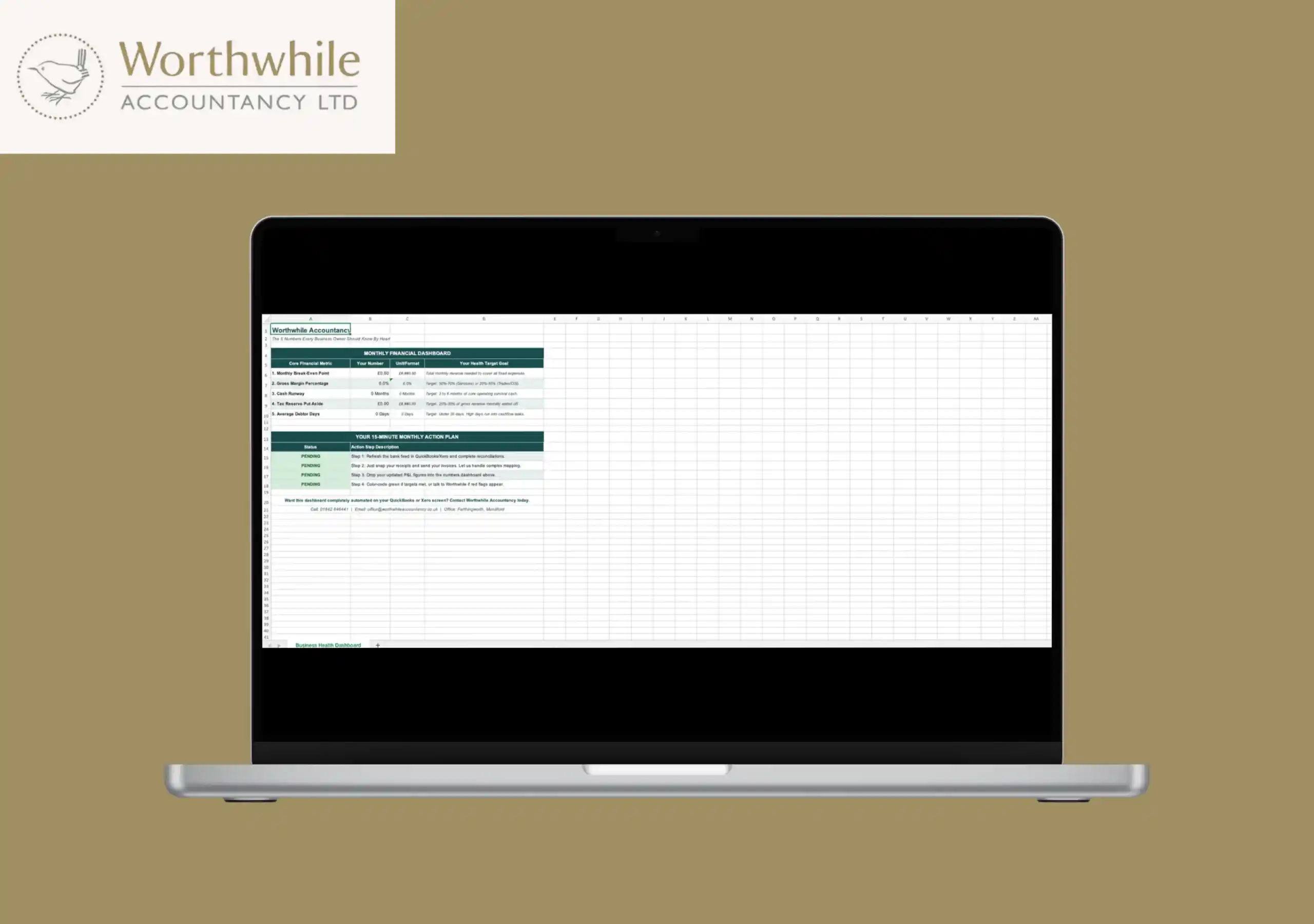
With modern cloud accounting tools like QuickBooks or Xero properly set up, these five numbers can be viewed instantly on a single dashboard. Once the systems are in place, spending just 15 minutes a month checking your data is all it takes to maintain total control.
Download Your Free Business Health Dashboard
Don’t spend hours wrestling with complicated tracking files. We’ve done the heavy lifting for you with a simple, clean, corporate layout designed specifically for small business owners and tradespeople.